
2026-10-11 ·
How Lake-Effect Snow Damages Roofs in Novi
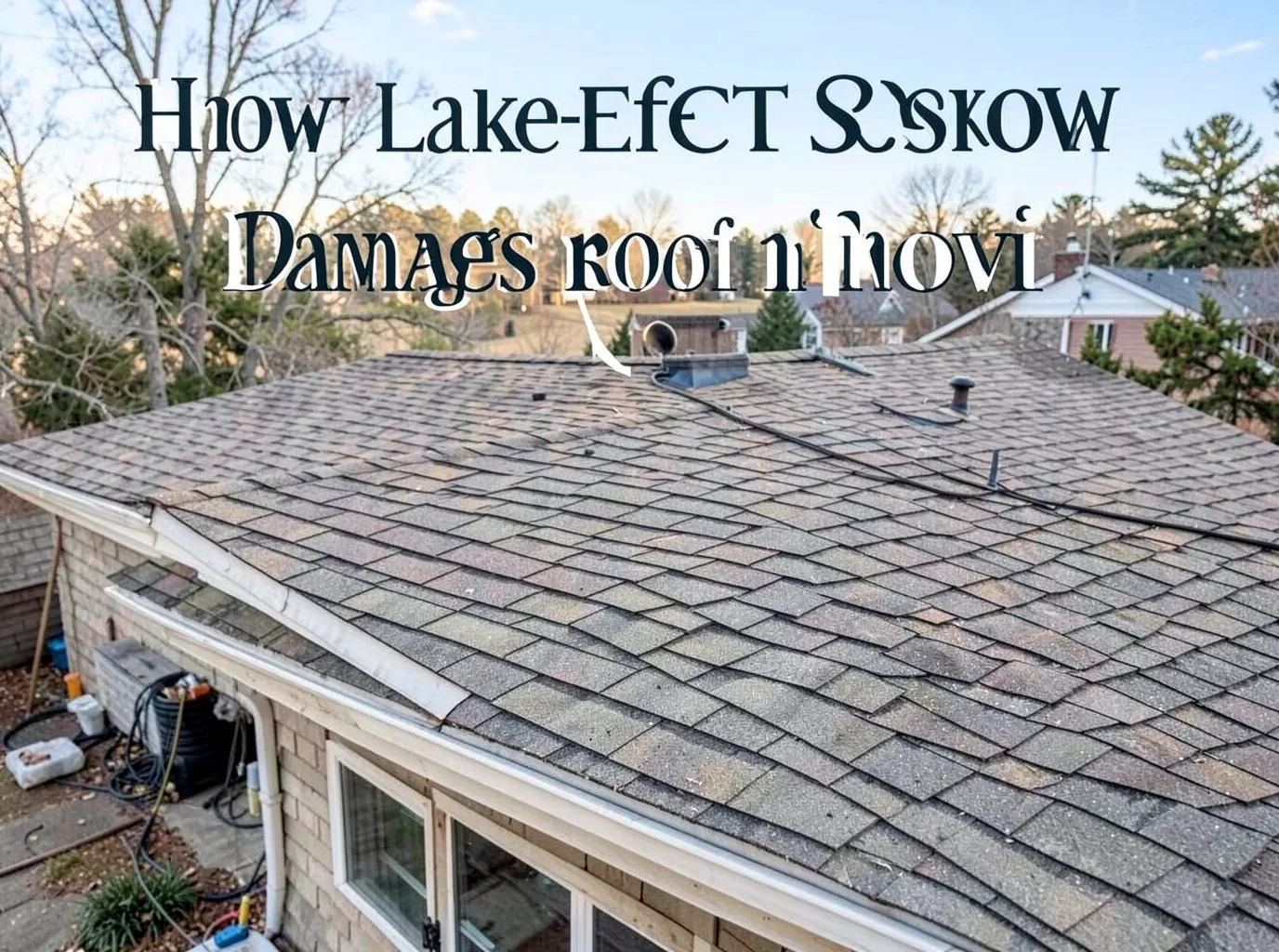
Lake-effect snow damages Novi roofs primarily through heavy accumulation that exceeds 20–30 pounds per square foot on older shingle systems, followed by ice dam formation along eaves that drives water under shingles and into attics. This process repeats during the cold, snowy winters typical of the region’s humid continental climate, especially after lake-effect bands move across Oakland County from Lake Michigan.
How Lake-Effect Snow Develops Over Novi
Novi sits in a corridor where cold air masses pick up moisture from the Great Lakes and drop it as intense, localized snow. Winters bring repeated events that can add 6–12 inches in a single night on roofs in Novi Town Center or near Twelve Oaks Mall. The added weight stresses rafters in homes built in the 1980s and 1990s around Lakes of Novi and Pebble Creek. When daytime temperatures rise above freezing while nights drop below, meltwater refreezes at the eaves and creates the dams that push water backward. These cycles are more pronounced than in inland parts of Oakland County because of the lake fetch that fuels the snow bands.
Ice Dam Formation and Resulting Leaks
Ice dams form when heat escaping from the attic melts snow on the upper roof while the eaves stay below freezing. Water travels under shingles and soaks insulation or drywall in homes near Providence Park Hospital and Maybury State Park. In Meadowbrook and Tollgate neighborhoods, the same pattern appears on south-facing slopes where sun exposure creates more melt. Once water reaches the interior, it often shows first around chimneys or pipe boots. Ice Dam Removal & Prevention crews see these leaks most often after the third or fourth lake-effect event of the season. The damage compounds faster on roofs that already have lifted shingles from prior winters.
Patterns Seen in Specific Novi Neighborhoods
Homes in Island Lake and Lakes of Novi experience more frequent dam issues because of tree cover that traps snow and limits sun exposure on roof sections. Providence Park streets show similar problems on two-story colonials where second-floor heat loss is higher. In contrast, newer builds near Suburban Collection Showplace sometimes have better ventilation but still develop dams at valleys where snow drifts deeper. Nearby cities such as Farmington Hills, Wixom, and Northville report the same lake-effect sequence, yet Novi’s mix of 25- to 40-year-old housing stock makes the leaks appear sooner once the first dam forms. Ice Dams: Why They Cause Leaks & How to Stop Them outlines the progression local crews document each winter.
Practical Inspection Steps After Heavy Snow
After lake-effect snow events, start at ground level and scan eaves for 6-inch or thicker ice ridges, especially on north and east exposures. Move to the attic with a flashlight and check for dark streaks on sheathing or wet insulation near the roof deck. Focus on areas above Novi Public Library or along routes to Novi Town Center where wind patterns create uneven snow loads. Note any sagging in older rafters common in Pebble Creek homes. If water has already reached interior ceilings, Emergency Roof Leak Repair teams can document the entry points before further melt occurs. Regular checks after each storm prevent small dam leaks from turning into larger structural repairs later in the season.